
New Mixes + Thoughts on Orientalism
Hey all! Happy to share some of my latest mixes that have been released.
First is the DJ mix I recorded at Drama Radio Bar in Mexico City. A session featuring Dub, Downtempo, Psychedelic Rock and Videogame Music. I recorded this set at sunset time which is the perfect descriptor for it's energy. You can either chill out to this one or get started with some dancing. I want to record more daytime sets please!
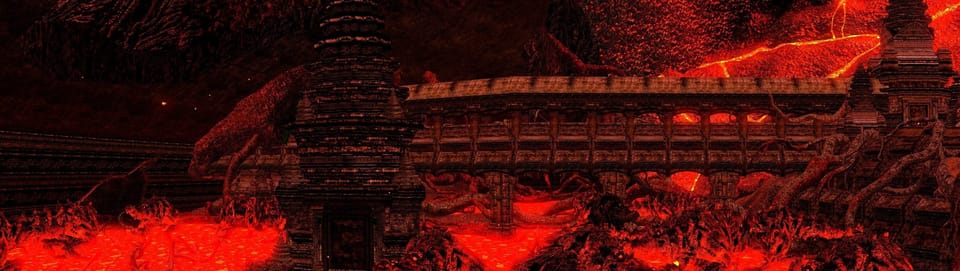
Next up is my "Temple" mix I recorded for Secret Level. This one is inspired by hinduist and buddhist spirituality and the eternal wheel of Samsara. It features raga, ritual ambient, entrancing drums, cursed temples and metempsychotic drone to go from bliss through hell all the way to rebirth. I also had great fun creating the tracklist inspired on triptych thai manuscripts and Yama, the god of death and justice rotating the wheel of Samsara.
![Tracklist in the form of a thai manuscript tryptich. Reads: Zia Mohiuddin Dagar - Alap (Raga Yaman) Tapes - Silence Please Part 1 Al Wootton - Calvinist Hospitality Dalibor Cruz - Untitled (3) Đ.K. - Enlightenment Process Steve Roach & Byron Metcalf - The Magma Clan Toru Minegishi - Arbiter's Grounds [The Legend of Zelda: Twilight Princess] Kurotokage - Nest Tetragrammacide - Kalikshetra-Kairo Consciousness Revival (Alogical Exegesis Of The Sandhipada-Sarisreepa Continuum Vigyaan) 落差草原 WWWW - 沒有形狀的默 Shapeless Beast Noriyuki Asakura - Tenrai Fortress [Tenchu: Wrath of Heaven] Scattered Purgatory/破地獄 - 魂顿 Limbo Litter Yuka Kitamura - Senpou Temple, Mt. Kongo [Sekiro - Shadows Die Twice] Phurpa - Fundamental Mantra of Bon Attila Csihar - Night of 29th of March (on my 41st birthday) in Hotel Jupiter in Baalbek while looking at the Thrilitons of the Jupiter Temple. NEPTUNIAN MAXIMALISM - To The Sun: HELIOZOAPOLIS - Les Criosphinx Sacrés d'Amon-Rê, Protecteurs du Cogito Ergo Sum Animal Senyawa - Sujud (Prostration) Geinoh Yamashirogumi - Primordial Germination](https://savepoint.cbdiabla.world/content/images/2026/06/Temple-Tracklist.png)
On Orientalism
This is the second time I release a DJ mix that is built around an orientalist aesthetic. The first one was titled Desert. I've always been interested in deconstructing orientalism because I've been simultaneously fascinated by it while also understanding how reductive of other cultures it can be. The term is theorized broadly by palestinian academic Edward Said, in case you want to dig in more into it.
In the West, growing up being ignorant about the "Orient" is our default. In one part, it's to be expected. Most people from a given geography will not be aware of the realities of other countries across the globe. On the other hand, the representation we do get is usually mired with stereotypes. It was part of the norm for me to grow up hearing people make racist assumptions about chinese people, call the japanese "taka taka", and seeing the rest of the Middle East and Asia as a big desert filled with people wearing turbans and scimitars.
Many of these things never clicked with me, as I was always curious about other worlds and imaginaries. I grew up fascinated by many of the orientalist worlds I saw in videogames: Mario 64's shifting sand land (whose soundtrack sampled ragas), Zelda's Gerudo Valley and temples, Castlevania's mish-mash of creatures from worldwide mythologies, and ninja/shinobi games that depict feudal Japan. In the inverse, I find that some of my favorite games are renditions of medieval or modern western settings by Japanese developers.
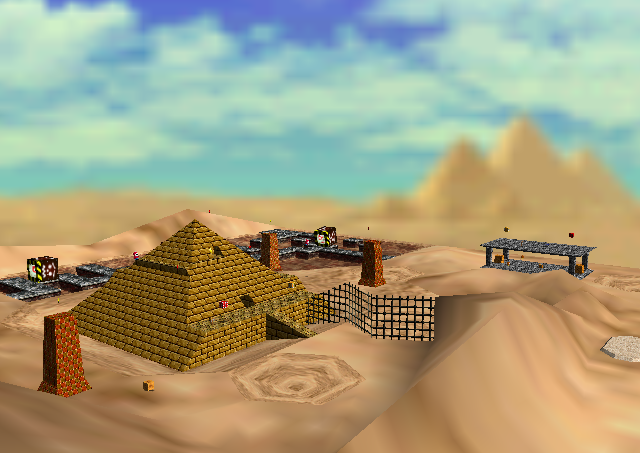
Many of these worlds were "desert levels" or "temples" beyond any semblance to reality, despite drawing from many sounds and aesthetics from different cultures. The effect on me was profound: I was exposed to many new sounds and images that got my imagination going. From there, I got curious and explored more, and discovered where all of these individual pieces come from. I find this to be an interesting aspect of orientalist worldbuilding in games: it usually doesn't claim to be anything more than what it actually is, a fantastic depiction of some distant unnamed world. This in contrast to Hollywood or marketing depictions that do say that something is "persian" or "arabic" without that being accurate at all.
Moving to the United States was really formative to me in this regard, as I actually met people from Iran, Syria, Turkey, India, Pakistan, Vietnam, China, Egypt, Saudi Arabia, Palestine, Yemen, Phillipines, Japan and more. I started learning about their individual experiences and cultures. I also saw the flipside in the extremely dangerous and generalized portrayal of arabs brought forth by the "war on terror", it being a political mechanism to further the interests of imperialism. Coupled with very offensive and stereotyped representations in mainstream media, I saw how dehumanizing and dangerous it was to intentionally reduce entire continents rich with myriad of histories into a single category.
Another topic that I noticed had a lot of prevalence in the United States was cultural appropriation. This is another subject that is extremely layered. Depending on the context where it's used, I find it can be either relevant or detrimental. The essential things to consider here are dynamics of class, race and power. When analyzed in large and systemic levels, it is essential to evaluate dynamics of cultural appropriation. When people with a differential of power leverage another culture for their own personal and financial gain, this is an explicit case of theft and dispossession. Think the music industry profiting from black innovations, rich chefs going to local communities to snatch generational knowledge, or new age practitioners leveraging indigenous knowledge while not redistributing in any way whatsoever.
On the other hand, I've found that when the idea of cultural appropriation moves into the interpersonal level, it usually does more harm than good. I've found many people to be terrified of "appropriating" another culture by engaging with it. This is probably a mix of a confrontation of white ideals and of a polarized online discourse that makes people be afraid of being "cancelled" (I've been there too, best thing to do is delete the social media app, go outside, and talk to people). But in my experience as a DJ, people usually get really excited when I play and share the music from their cultures.
When we fear appropriating something, what we are actually doing is isolating ourselves and creating monocultures where only the hegemonic culture prevails. This is a disservice to the wonderful diversity that this world has to offer, that's the beauty of being alive in it. When done with curiosity, respect and reciprocity, it's always a win-win situation. This is why I love playing music from all across the world, as it is an infinite interconnected map where I keep discovering new pathways, and I hope that listeners can explore it as well.
For the research I did for this "Temple" mix, I explored some Hinduist and Buddhist temples in Japan, India, Indonesia, Cambodia, China (near Mongolia) and Tibet. It was really fascinating to see how these contiguous regions have spiritual similarities while also branching out into their own particularities and mixtures with their own indigenous traditions. I would love to get to see some of these places in person someday.
To wrap up, I highly, highly, recommend this video by Farya Faraji, an iranian musician and ethnomusicologist that goes into the intricacies of how orientalist music is made, and how absurd it is when it is done without the proper research. One of my favorite takes on the subject, both insightful and hilarious!
Member discussion