
A Conversation with Atraco: Salamanca's Urban Music Collective
I am happy to share that I am back to interviewing. In this occasion, I sat down to chat with Diego (Loredo), Andrés (Drew) and Paulina from Atraco, a collective from Salamanca (México) that takes a passion for urban music to create parties, recorded sessions and musical releases; everything tied up by a captivating visual indentity. In this talk we go into their operation as a collective, their experience developing independent events in the context of Salamanca, and their focus on strenghtening music culture and its creative communities
Hello, how are you all doing? Thanks for meeting with me to chat about Atraco.
[Diego] Our pleasure. It’s really cool that the information is available in both Spanish and English, because often—especially in the United States— that matters a great deal to the Latino community. Having access to information is something that opens a lot of doors.
How did Atraco get started?
[Diego] Atraco emerged as a fresh proposal for the scene in Salamanca, Guanajuato, in response to issues of public safety and a lack of options for going out to hear good music at an affordable price. Given this social and cultural context, we realized that there wasn't much left that people truly felt a connection with. They are searching for something new. Carlos, Andrés, and I set out to address this need, and that’s how Atraco was born. The idea behind the name, setting aside its literal definition, was to find something catchy; one of those spanish words that get tossed around in everyday conversation. Like chido here in Mexico, or chimba in Colombia. Or, for instance, the word bulla, a term you hardly ever hear here in Mexico. But after spending time with people from Central and South America, I noticed they’d say things like "la bulla está alta", and that really caught my attention.
[Andrés] In Salamanca, at least for those of us from the same generation, we were accustomed to having constant events taking place in the city, which generally featured excellent programming. The Salamanca audience has really honed its musical palate over the last few years, shaped by various musical currents, and as a result, the scene has changed quite a bit. Unlike what we might call the "old school Salamanca" era, our generation has had to completely rethink what we’re going to offer to this new, evolving audience.
Atraco is a project that we’ve dedicated ourselves into to turn it into something professional. It started out in the classic scenario of a project between friends. But seeing the massive opportunity that existed in Salamanca and the surrounding areas, we decided to fully commit ourselves and execute it at the highest possible level. By the end of this year, we’ll be approaching our two-year mark. Since our very first party in Salamanca, our horizons have broadened, allowing us to consistently offer something more authentic. Something with which, as Diego puts it, the audience can truly identify with. We aim to serve not merely as party promoters, but to go a step further by promoting urban culture.
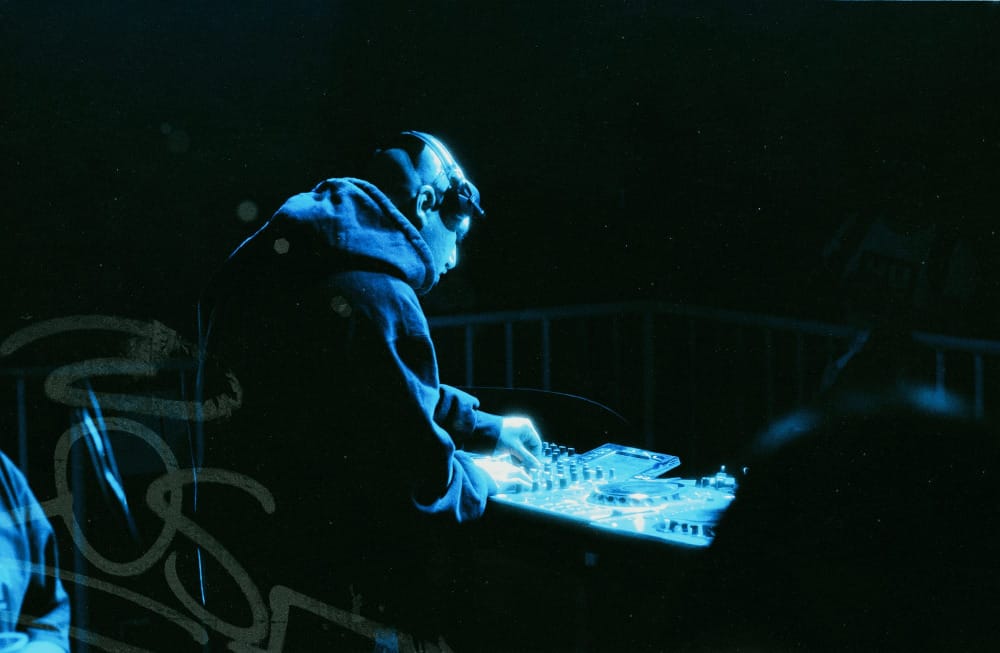
The collective has now grown and brought in new members. What is your collaborative process like?
[Diego] Right now, there are six of us. I’m the one who tries to bring everything together. I handle the engineering, logistics (such as the setup layout for our parties), and the more physical tasks. Everything else branches out from there. Andrés (Drew) takes care of audio. Then there’s Paulina, who manages our communications and visual identity. Our primary communication channel is Instagram. We reach a lot of people there, so we have to ensure it is highly polished. Another member of our team, Carlos (Caper), focuses on security matters and on negotiating deals with other individuals and vendors. He is really skilled for navigating that specific environment. Plus, since he’s a welder, he advises us on the structural stability of the rigs we use for our setups. Jesús (Lov-J) helps us with contractual matters. We actually ran into a situation with a project where the other party asked us for upfront payment to proceed as they liked. Jesús alerted us to the risks involved in that deal. And Christian (Sanssoleil) helps us by creating soundtracks and sound effects for the videos and reels we publish, in addition to offering input on our communications strategy. Broadly speaking, all six of us engage in brainstorming sessions to imagine, refine the details, and solidify our vision for each event.
[Andrés] In our structure, we assign specific roles based on each person’s individual profile. We start from a common set of skills to create a departmentalized structure: visual identity, audio/lighting, etc... Once each department has completed its specific tasks, we hold brainstorming meetings where we pitch ideas and vote on them democratically. This allows us to filter our processes and select those that receive the majority of the votes. We strive to execute this as efficiently as possible, because with a larger number of members, the complexity in time and opinions increases. We like to be as objective as possible to ensure that every opinion is included.
We approach all of this through the experience Diego and I have gained organizing events since high school. We learned as we went along, which is why today we have established processes for logistics, planning, and creativity. This led us to realize that Atraco needed to be composed of members dedicated to contributing what each person does best. Within the team, every member is a key piece fulfilling a very specific role. Rather than operating as a collective or a traditional promoter, we function as a company, formalizing things through a signed contract. It is a way of operating that makes our commitment to our long-term goals official, while still maintaining our underground ethos.
[Paulina] For the visual aspect, as with my brand, my ideas stem from my extensive visual culture. Ideas come to me from the references I follow, like german and parisian designers whose flyer designs are very minimalist, organized, and spontaneous all at once, very understated in my opinion. I think it's important to go back to basics and remember, as the German designer Dieter Rams says, that sometimes "less, but better" yields the best results. That's why I like to blend kitsch and street style with simplicity, functionality, and aesthetics. I always try to follow Atraco's vision and concept, but help it break free from the predictable.
I have many more ideas that I want to gradually implement in the project as it evolves. What excites me most is reaching those who appreciate these details and finding greater reach; ensuring that the visual identity communicates the same quality in terms of audio, concept, and the overall experience at our events.
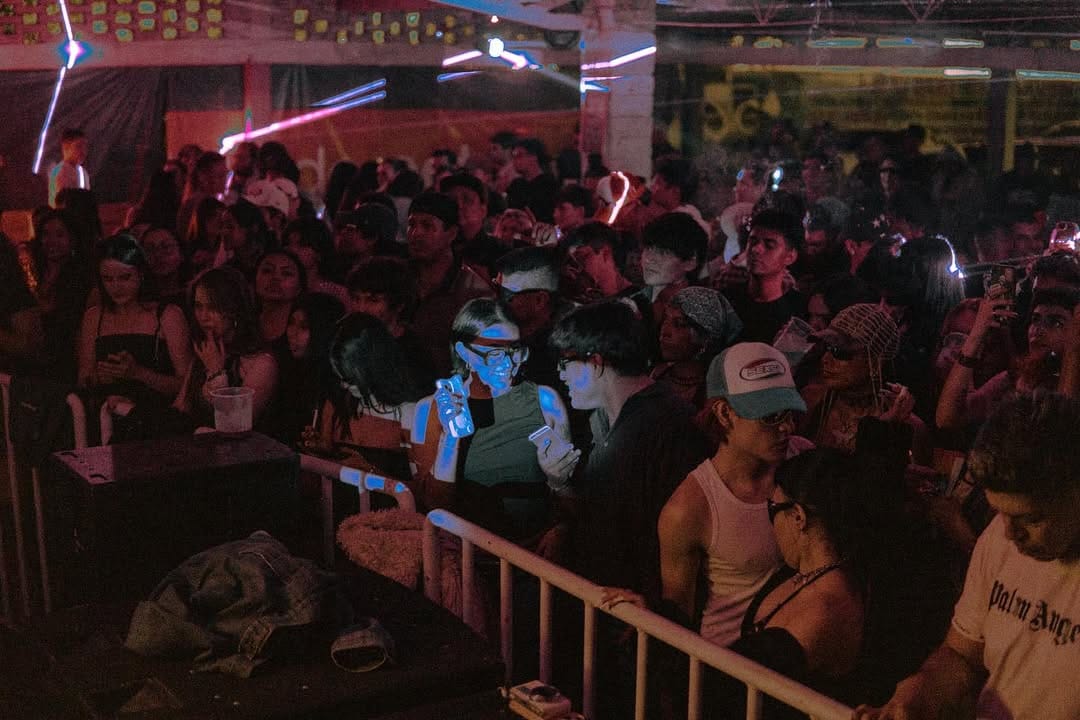
Tell me more about the process of throwing parties in this changing landscape. What do you focus on when organizing an event, and what challenges do you face?
[Diego] The primary challenge is finding a moment of calm at the state level, something that is very complex. Locally, we try to approach things on a zone-by-zone basis, as there are certain parts of the city that unfortunately are currently under a curfew. It’s very sad because there are many large and spacious venues that happen to be located in conflictive zones, which limits what we are able to offer. However, we have to abide by these restrictions because, for us, safety always comes first. Not only around organized crime but also inside the party itself. We don't want anyone to feel uncomfortable for expressing themselves.
Another thing we’ve noticed is that our events have managed to bring together people from the upper, middle, and lower classes. I think that’s really cool, because it represents a unity forged through music. You don’t feel any barriers as if we were members of political parties. In many contexts, so-called "security" is invasive rather than safeguarding, like when a brown person walks into a department store and gets followed around by staff. We know that approach doesn't work and that it doesn't actually provide security. Instead, we strive to ensure that if anyone needs assistance, they feel comfortable approaching any member of our security staff. At our first event, a guest attended in a wheelchair. We offered to help, but it wasn't necessary since they had a companion. It’s a topic that doesn’t get discussed enough, but we are interested in people with mobility impairments being able to access these kinds of events. These people matter as they are also part of our society.
The work for our parties begins four months in advance. It starts with conceptualization: brainstorming ideas, defining the party’s visual identity, curating the musical lineup, etc... During this period, we release content such as reels and posts to announce it. We consult with Andrés regarding the venue selection, whether that involves reviewing photos and videos or visiting the site in person. It’s during the three days before the event that things become more physical and exhausting. We begin with a process of cleaning the space: doing gardening, sweeping, and cleaning the restrooms. In any entrepreneurial venture, one inevitably has to perform these basic and humble tasks, duties that many people prefer to delegate to other personnel. However, we prefer to handle them ourselves, as we gather a great deal of information on details that could prove crucial to the event's success. We take pride in the fact that our restrooms are always spotless and stocked with toilet paper. At almost every rave or electronic/urban music event, the restrooms end up being a disaster, to the point where people don't even want to use them. The audio and lighting systems are always set up on the day of the event itself, starting at 8:00 AM, to avoid any last-minute issues, since unexpected issues always arise. Given my background, I strive to ensure that everything is safe: I make sure no extension cords are lying around and that we have access to stable power outlets. Almost always we end up connecting directly to the venue's main power supply to avoid experiencing blackouts or damaging our equipment.
[Andrés] One of the most challenging aspects is venue scouting, as we have numerous factors to consider such as attendee safety, or ensuring there is nearby parking available for staff, vendors, and guests. We also need to ensure the venue facilitates a smooth flow of people and offers the space required to setup a stage. For every edition of our events, we strive to do things differently so that the experience never feels monotonous or repetitive. We are always considering new ideas and seeking out recommendations. We also pay close attention to details, such as ensuring that the venue's existing structures are sufficiently sturdy. Since we operate at high sound pressure levels, certain materials are more susceptible to being affected by the vibrations. We don't want to end up in an awkward situation with the venue owner, like "Hey... this fell down," or "That piece came loose."
The venue's acoustics are another important factor to consider. A particularly tough challenge we sometimes face is that, even when the venue is packed, there may still be significant echo, which places a limit on how high we can turn up the volume. I also make it a priority to safeguard our hearing. Our sense of hearing is a very valuable treasure, one that is finite and gradually deteriorates over the course of our lives. I place a great deal of emphasis on this, providing the best possible audio system and performing ideal optimization so that we can achieve very high sound pressure levels without posing a risk of hearing loss.
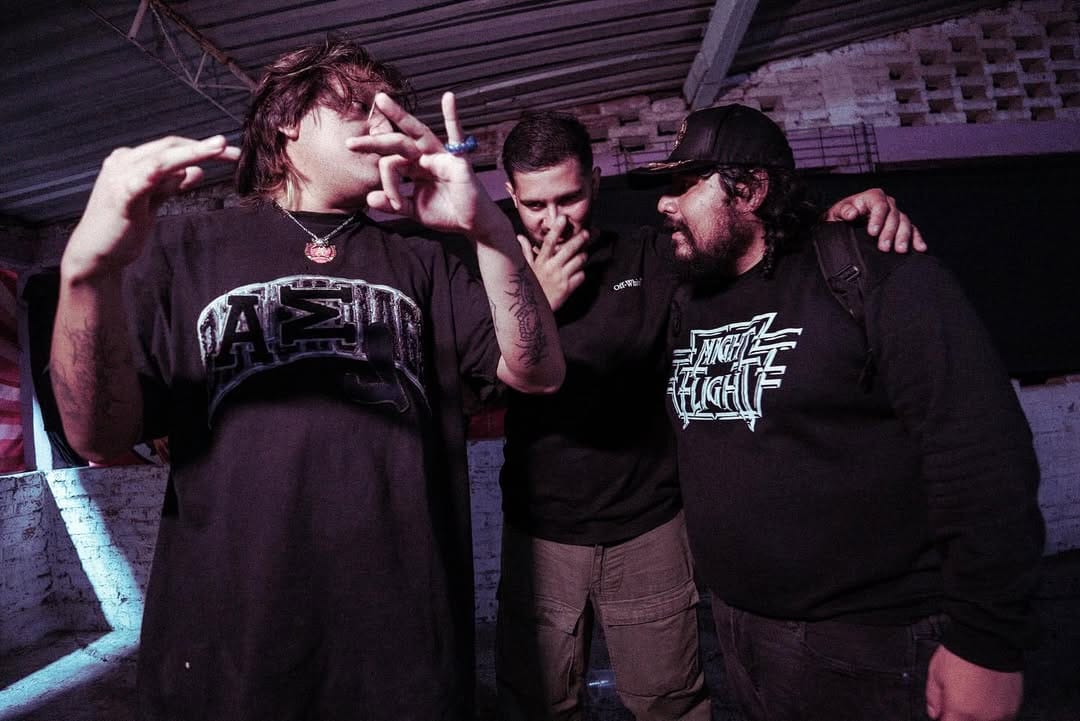
What is your curation process for lineups, and what is your relationship with the artists?
[Diego] Regarding the artistic side, we always select fresh talent that can lead us to a win-win situation. For instance, for our first full fledged edition we brought in Ezya, a leading figure in Mexico’s underground reggaeton scene. Since he hadn't performed here yet, and since reggaeton represents something significant within Latin American culture, we decided to include him in the lineup. At another party, we booked Ruido con H. He had visited Salamanca several times in the past, but it had been ten years since he last played here. So, we thought it would be a great idea to include him in a lineup once again. In this way, people are drawn to the fact that this party focuses exclusively on Latin American street sounds: reggaeton, guaracha, tribal house, etc....
[Andres] As DJs within the collective, we’ve chosen to focus on our roots, as well as on what our neighboring countries have to offer. Being pigeonholed into a single style is the last thing we want, which is why we strive to diversify. For our parties, we try to ensure that the lineups never feel repetitive. That’s why, whenever we perform, we bill ourselves as "Atraco Sistema", to have a varied and changing presence as a collective. Our ethos runs counter to everything mainstream, such as massive festivals. We work with the resources at hand and look to create an atmosphere that feels as authentic as possible within our specific context.
[Diego] Regarding our dealings with artists, we always check to see if they have specific technical riders. With the exception of one instance where an artist requested four CDJs (a requirement we couldn't meet at the time), we’ve always been able to provide whatever has been requested of us. We’ve noticed that every artist who has visited us has left feeling deeply appreciative. Rather than connecting with them as professional contacts based on paperwork or contracts, we’ve become close. With Ezya, Regal86, and Rosa Pistola, our collaborations grew out of a shared passion for music and understanding of the hard work required to bringing it to our region. Rather than wanting fame, we aim to let the music shine together with a visual and cultural identity.
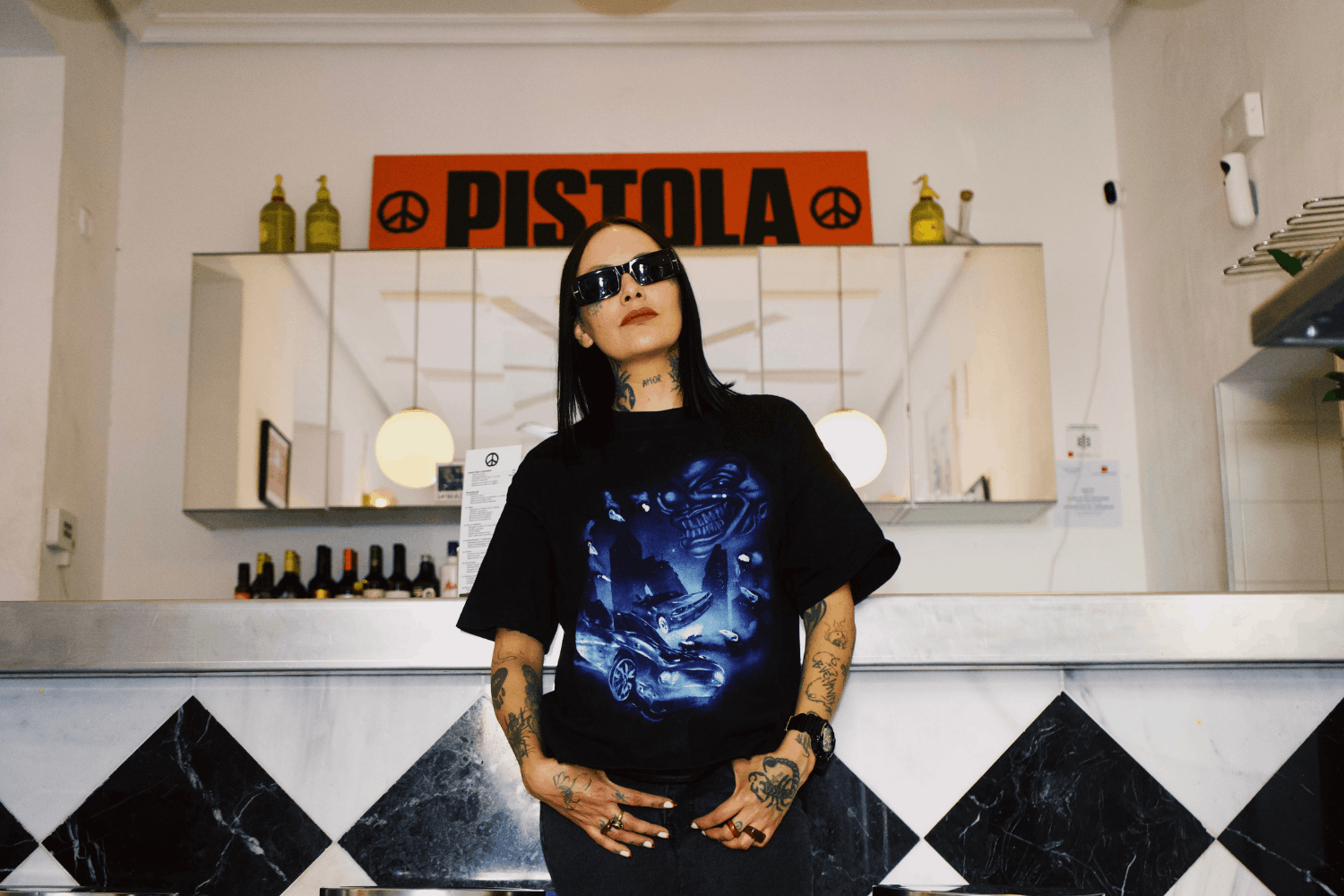
In the process you’ve shared, I see a great deal of intentionality behind every step you take. Having recently been invited to play at the latest "Atraco Sessions," I noticed that care reflected in the curation of the space. What is your intention behind creating this space where you film local talent? How do you translate the party into this more intimate setting?
[Diego] Many of us on the team believe that the sun rises for everyone. One of our goals is to give local artists the opportunity to record a 30 minute session showcasing their musical lineage within urban music. Many DJ streaming formats run for an hour, but we’ve opted for a 30 minute duration because it is a greater challenge for the artist and helps ensure better audience retention. The truth is that stories, reels, and the TikTok format have diminished people's attention spans. This is a response so people can pay closer attention. Another factor is that we always host our Sessions in different locations. The first one took place at Paulina’s house. The second was held at the auto repair shop of a friend of ours located in a conflictive zone. We filmed in the afternoon and fortunately everything went smoothly, no incidents took place. It was an interesting session because other friends and acquaintances showed up to skate. That's part of our goal to make visible other talent in the urban context besides music.
[Andrés] Yeah, actually, I just remembered that we did a semi Atraco Sessions at my mom’s laundromat. It’s an industrial-scale laundry facility, so we used the massive dryers as our backdrop. We pulled some clips from that shoot. Salamanca is a city that isn't particularly aesthetic, but we’ve embraced this as a challenge to simultaneously educate and satisfy our audience. We pay close attention to what they enjoy, without falling into the trap of trying to pander to everyone’s tastes, because this would make us lose our identity.
We strive to highlight the added value in everything we offer at our events: whether it’s the drinks or the overall sensory experience. A fundamental part of our education as event organizers involves knowing how to be a customer. That’s why it’s so important for us to go out and explore new places, to observe areas for improvement that others might not have noticed yet. That is why we wanted to expand our Sessions to other places that could offer us the opportunity to explore different audiences and continue learning. We also wanted to offer a different concept with a smaller and more select crowd. The main Atraco parties are more massive events featuring artists with a broader trajectory and exposure, whereas the Sessions are entirely focused on showcasing emerging talent.
What is your relationship with your audience, and how do you involve them in your evolution?
[Diego] We don't want to punish people with our prices. Guanajuato allowed its chemical industry to die out, shifting its entire focus to the manufacturing sector. Far from improving, the state worsened. Since these industries no longer required highly skilled labor, they prioritize training people as quickly as possible, which results in minimal wages. And sadly here in Salamanca we are witnessing the consequences of this. That is why we strive to adapt to the social context. We make a conscious effort to understand the salaries in these industries so that people can have a good time without ruining the finances and allowing them to forget a little bit about work-related stress. We’ve received a great response. At our bar, nothing costs more than one hundred pesos. If someone walks in with about five hundred pesos in their pocket, they’re going to have a really good time.
At large-scale events (think Tulum or major festivals in Miami/Orlando like Ultra or EDC), if you want to be close to the DJ, you have to buy more expensive tickets. For our last edition, we decided that anyone who wanted to stand right next to the DJ shouldn't have to pay extra and for everyone to have the opportunity to access the same experience. The music will always be the most important thing. I feel like a lot of event organizers think people are stupid. I beg to differ, I believe that when people see that the sound and lighting are great, they have a great time and want to stick around longer.
[Andrés] Educating the audience means making them aware of the added value they are getting for the total amount they are paying, from the cover charge to the drinks at the bar. And precisely it's about paying close attention to what is being offered in other cities and at what prices. It's market research to inform ourselves on every front. Audiences change radically depending on the city. I used to study in Morelia, Michoacán. During my entire time there, it was an audience that I never identified with, because it stands in contrast to what we’re accustomed to here in the Bajío. What struck me about Michoacán was that despite the region’s rich musical tradition and education, the electronic music sounds I heard there seemed several years behind by comparison. For instance, in Valle de Bravo, I heard sounds that we had been playing ourselves more than ten years earlier. Immersing ourselves in these regional differences across the country is something that drives us to adapt and become more versatile.
One thing that caught my attention is that, in one of your Sessions, you also featured rap artists. You’ve actually included these artists in the compilation album you’re about to release. How do you seek to reflect the surrounding urban context, regardless of the boundaries between electronic music genres?
[Diego] With this compilation we aim to bring together producers from Salamanca. Some don't work within an urban sound, but we invited them to give it a try and they did great. Another guest is a friend of ours (Stuuks), with whom since we were fourteen, used to go to a spot downtown to practice on the newest CDJs available in Salamanca (which, well, weren't exactly that cutting-edge 🤠). We’d practice there and spend our time just talking about music. I learned about music production through some courses with Enrique Góngora, and I'd like to share that expertise with new talent, like those coming from the hip-hop scene. Dezzz and Dr. Xan, who also appear on the compilation, are people we’re very close with, really great guys. It’s been interesting to discover the intersections in our musical influences. We’ve chatted about the SoundCloud rap scene of 2016 and lesser-known artists like Bryson Tiller, as well as I was surprised to find out they were already familiar with UK Garage thanks to PinkPantheress. This diversity of perspectives helps enrich the urban and bass sound we’re cultivating here in Salamanca.
[Andrés] It fills us with a great sense of satisfaction and pride to be able to play a part in the artistic journeys of other artists that we appreciate. We fully understand everything that goes into producing and distributing one’s music. As Diego mentioned, for many of us SoundCloud functions as a musical library where you can find lots of exclusive content. We want to preserve this essence while distributing the music across Bandcamp, SoundCloud, and various other mainstream platforms. This V/A compilation is specifically focused on the Bajío community. We will always champion local talent and artists from the surrounding areas. Down the road, we’d like to expand to include both national and international talent. We want to remain open to this diversity of genres. The guys Diego just mentioned are from our city but I didn't know about them. I had never heard any hip-hop or trap music coming out of Salamanca, and I was really surprised by the quality of their work.
We’re always here to contribute however we can. I am always willing to serve and support friends and acquaintances whom I see as committed and consistent, because down the road they might have something really cool to offer. Because nowadays, releasing a track requires knowing how to do a little bit of everything. Simply knowing how to produce isn't enough anymore. That’s why we decided to create the Atraco label: to continue championing all these projects we’ve been discussing.
What's on the horizon for Atraco? Personally, what are you excited to continue exploring?
[Diego] Since we don't know how the city is going to react to the problems we have mentioned, in the future we see ourselves holding more specific parties, in smaller and more intimate locations, twice a year. We will also be releasing more compilations or EPs through the label, both from the hip hop and bass music scenes. We want to continue discovering more talented people both locally and nationally and reaching out to them.
[Andrés] We have the vision of continuing to expand. The horizon is limited to what the current situation of the country permits and the level of challenge that we choose. We want to continue raising the bar as high as possible and serve as a reference, even venturing into other types of disciplines to complement music. For example, we would like to create educational content and continue sharing our experience, knowledge and professional training that each of our members have. We don't like to pigeonhole ourselves, we are interested in everything related to culture. We want to take advantage of the opportunities that arise so that all those who participate and attend feel identified with what Atraco is. In many ways we are just getting started. We put our experience into practice to organize events and are polishing our identity and image, and now we feel that we are operating at a professional level.
I looked up the word "atracar" in the dictionary and it gave me 11 definitions. I love how it can be given multiple interpretations. For each of you, what is the first thing that comes to mind when you hear it?
[Diego] What comes to mind for me are these newspapers that put in huge letters "ROBBERY" (Atraco), referring to the action of stealing or taking away other people's belongings. It's the experience that comes out seeing a very striking word in the news.
[Andrés] Yes, I agree too. I like it because underground culture has always been protecting itself from the government and other types of social threats. So a heist is heard as something symbolic. We like it when people who regularly go to our events say: "There's going to be an Atraco." It feels like people are already identifying with the word in a more universal sense. It is a good sign that we are on the right path and how we are being recognized both by the word and with the identity we want. We are going to continue generating more for the public, for the people. There are many things pending from Atraco towards the world. And we hope that the world gives back if possible. Feel free to give us your feedback, because we want to include the public's opinion to know exactly where to direct the project. We are totally open to all kinds of opinions, with all pleasure.
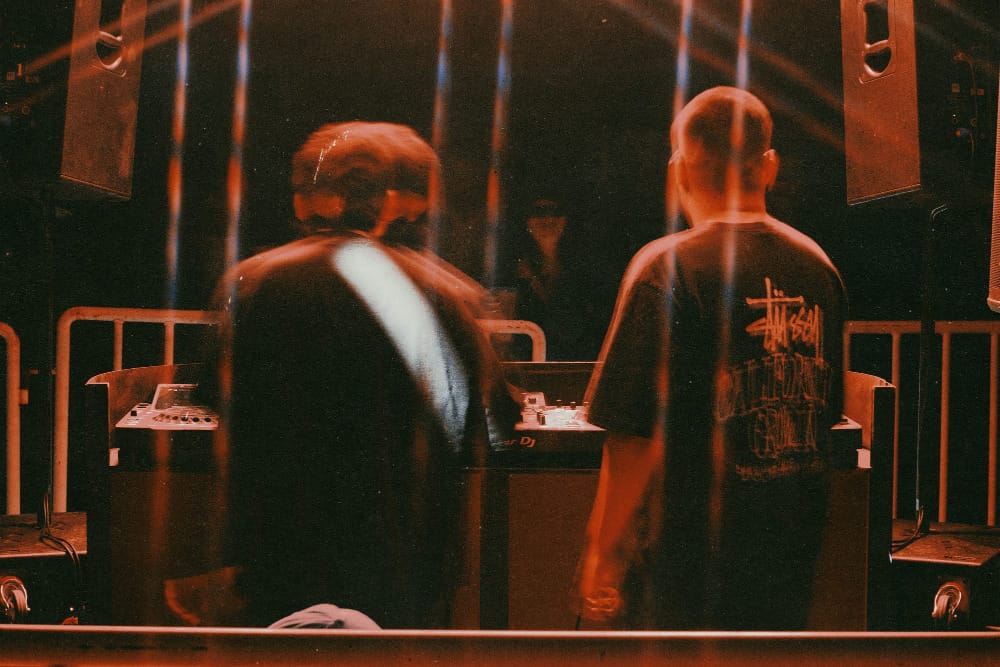
Thank you very much for sharing your knowledge, I am very happy to hear from your experience
[Andrés] Just as other people are grateful for being invited to our space, we are also grateful for this space that you are giving us. All of this serves to have greater cohesion between the community that we can create, and serves as learning for everyone. As we said, to be organizers you have to learn to be clients. And on this occasion, being invited, I have really enjoyed that we have been able to share this experience and knowledge. I hope this material is of great benefit to those who read it.
[Diego] I am totally grateful for the opportunity of the radio slot last year as well as this interview. I think that more than a transactional "I give you, you give me", I have a cool feeling of generating community. More than artists and organizers, we are human beings and social beings who need to be in contact with others to be happy. Once the event or opportunity passes, what is valuable is the friendly relationship that is forged when going for some beers and tacos.
[Diego] Now, what would you like to tell us?
[CBDiabla] I am also thankful for being invited to the Session that was held in Querétaro. It was very cool to see a collective like yours, working in a very situated, local and self-managed manner. At a time when everything is super individualized or directed towards foreign industries, seeing something like this in a context like Salamanca (which many people could look down on), opens my perspective a lot. Seeing the resilience, creativity and desire to connect with music, friends and community there reminds me what is important.
[Diego] Salamanca is like the new Detroit but mexican. Just as polluted, just as dangerous, but very eager to make music.
Follow Atraco on Instagram, Youtube and Soundcloud
Consider upgrading to a paid subscription to support independent journalism 💜
Member discussion